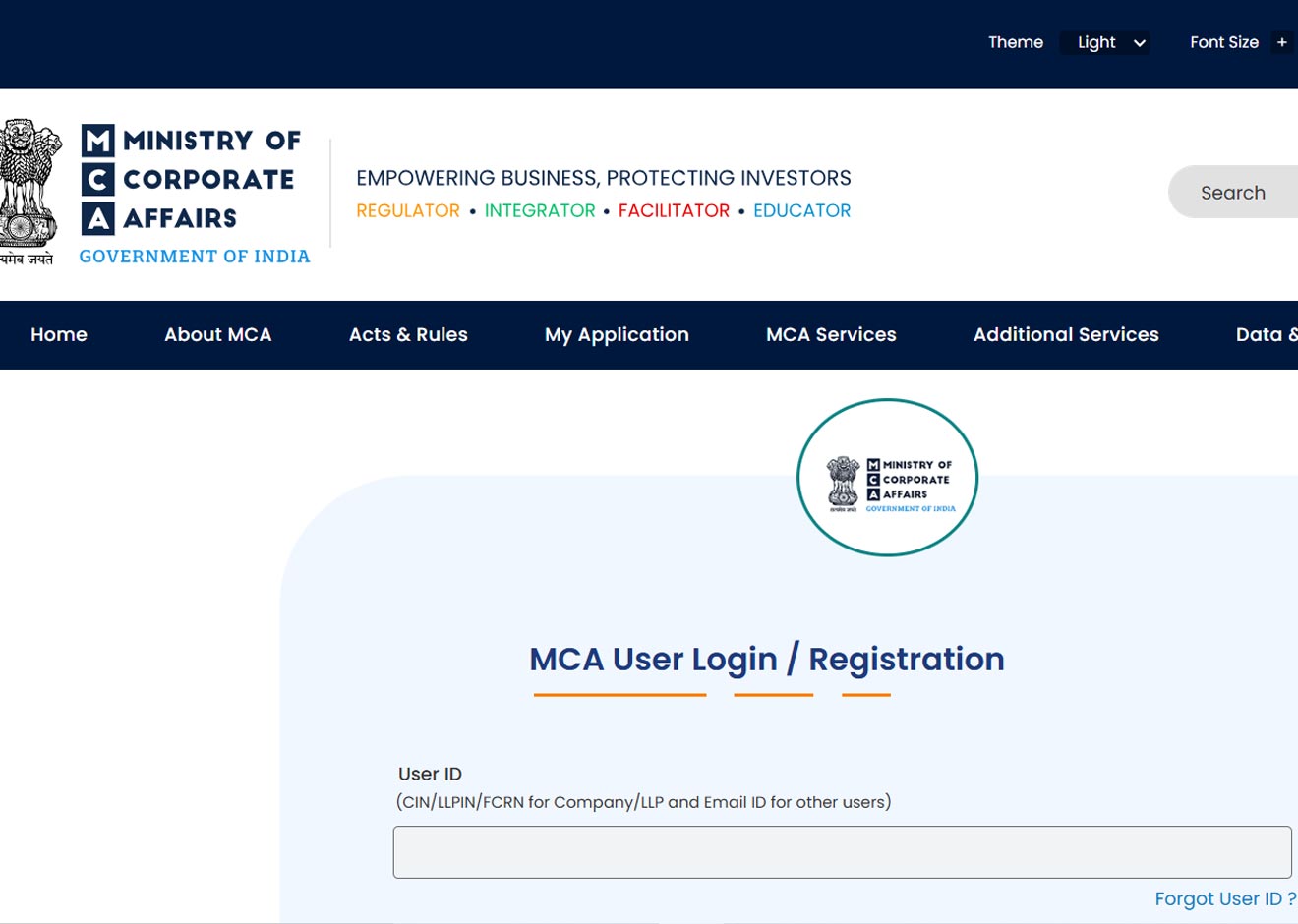
MCA upgraded its portal to version 3 (V3), for corporates to streamline their compliance in India. When they announced, they promised better integration, smoother workflows and better transparency. However, professionals across the country have a slightly different experience.
For Company Secretaries, Chartered Accountants and in-house staff, who work on a daily basis with the Ministry of Corporate Affairs system, find it difficult (sometimes). This is because even a minor glitch in the system can throw off the entire filing schedule.
Deadlines under the Companies Act, 2013 are not flexible. The portal, however, sometimes is. Below is a practical look at the challenges users are facing.
1. Form Filing and Data Issues:
- Frequent technical errors during submission, causing forms to fail to upload.
- Prefill data in forms often shows as blank or incorrect, requiring manual re-entry.
- Difficulty in generating the PDF version of forms after submission.
- Incorrect company forms being downloaded many times.
- Persistent error message “Please try again after some time or contact support”.
- Drop down issue is there many times drop down will not reflect.
- Many times, save button will not work causing difficulties in saving the filed form.
From a professional standpoint, these are not just “minor technical issues”. When prefill data disappears or appears incorrectly, it increases the risk of unintentional mistakes. Manual re-entry will consumes more working hours. And to make it worse, when the “Save” button fails after 30-40 minutes of data entry, it is not only frustrating, but it also affects the turnaround time and client confidence.
There are days when everything works smoothly. And then there are days when you refresh the page five times and hope for the best.
2. DSC (Digital Signature Certificate) and Sign-in Problems:
- DSC registration/association failures are common.
- System often fails to recognize DSCs or they do not appear with the required green tick mark.
- Issues with signing forms, particularly for directors, leading to unsigned forms.
- OTP issues while updating role as Director.
Even when DSCs are valid and properly registered, the system may not recognize them. The absence of the green tick mark often creates confusion – especially when filing time-sensitive forms.
For directors who are not tech-savvy, OTP failures during role updates create an additional layer of delay. In compliance practice, delays of even a day can mean additional fees or late filing penalties.
3. View Public Documents (VPD) Failure
- The V3 portal has faced prolonged downtime for the “View Public Documents” feature, which is crucial for professionals as it is available only between 6.00 P.M. to 9.00 A.M.
The VPD feature is essential for professionals conducting due diligence, transaction reviews or compliance checks.
The limited time window itself requires careful planning. When downtime overlaps with that window, it effectively blocks access. For firms handling M&A transactions or secretarial audits, this creates operational bottlenecks.
You plan your evening around accessing documents – and then the portal decides otherwise.
4. Now Master Data can only be viewed by login into MCA V3 Id.
While login-based access enhances control and traceability, it has added an additional step in workflows where earlier quick access was possible. For professionals who frequently verify CIN details, director information or company status, this adds incremental time – small individually, but significant enough.
5. Issues Faced in Filling and Uploading Form AOC-4 and MGT-7/7A
- Users are facing several technical difficulties while filing and uploading AOC-4 and MGT-7A forms on the MCA V3 portal, including the following:
- Dropdown fields frequently do not populate or refresh, making selection impossible.
- Difficulty in generating or downloading the PDF version of the forms after successful submission.
- During upload, the system often prompts to download a newer version of the PDF, even when the latest version is already in use.
- Attachments uploaded with the forms often do not reflect or disappear after upload.
- The “Save” button frequently does not work, forcing users to re-fill the entire form.
- Despite DSCs being properly registered and associated, the MCA V3 portal often shows errors indicating that the DSC is not associated.
Annual filing forms like AOC-4 and MGT-7/7A are critical statutory compliances. During peak filing season – especially around September and October – portal stability becomes even more important.
These issues become particularly stressful close to due dates. Filing AOC-4 (financial statements) and MGT-7/7A (annual return) is not optional – but it is mandatory under the Companies Act. When attachments disappear after upload or the system demands a “newer version” that does not exist, professionals are left troubleshooting instead of focusing on advisory work.
It is not about resistance to change. Most professionals are comfortable with digital compliance. The concern is predictability. Compliance systems need stability more than flashy upgrades.
The Practical Impact on Compliance Ecosystem
If we step back for a moment, these are not isolated complaints. They impact:
- Timely statutory filings
- Client advisory timelines
- Due diligence processes
- Annual compliance cycles
- Internal governance reporting
In a country with over 16 lakh active companies (as per recent MCA statistics), even a small percentage of portal friction translates into thousands of affected filings.
The intention behind MCA V3 is modernization. That part is clear. But modernization must also mean reliability, scalability and user experience that supports professionals – not slows them down.
How can MSA help?
MSA can assist you in the following ways by addressing the challenges under MCA V3 portal:
- Ensuring correct form version usage and compatibility checks.
- Systematic backup of filled data to prevent loss due to save/portal errors.
- Pre-verification of data before upload to minimize portal rejection errors.
- DSC registration and troubleshooting support.
- Coordination with MCA helpdesks where escalation is required.
- Raising and tracking service requests with MCA authorities
- Monitoring compliance calendar to ensure deadlines are met, despite system instability.
- Advance preparation and early filing plans to avoid last-minute portal congestion.
- Ensuring statutory accuracy to reduce the possibility of additional fees.
- Advisory support on documentation, governance and regulatory best practices.
Conclusion
The MCA V3 portal represents an important step toward digitized corporate governance. However, ongoing technical glitches, DSC authentication errors, VPD downtime and form filing challenges continue to affect daily compliance work.
Professionals are adapting. They always do. But a stable, predictable and responsive portal environment would significantly reduce compliance stress across the ecosystem.
At the end of the day, compliance is already complex. The platform used to file it shouldn’t add another layer of complexity.
Author Bio: